
Home /
Home /
Airports have long been measured by efficiency, not experience. Yet a growing number are rethinking their role within the cultural landscape. They are becoming places that reflect identity, creativity, and belonging, giving the first and last impression a city leaves on millions of travellers each year.
At the Arts in the Airport Workshop in Tampa, leaders from across North America came together to explore how art can elevate infrastructure and shape more meaningful environments. Our team joined the discussions and tours, gaining valuable insight into how airports are approaching art with a renewed sense of purpose.
Airports that integrate art into capital planning from the start are seeing tangible benefits. When artistic vision evolves alongside architectural design, it avoids late-stage coordination issues, reduces costs, and leads to stronger integration between creative expression and spatial function.
More importantly, early investment in culture ensures that each project contributes to a cohesive sense of place. Rather than treating art as a finishing touch, it becomes part of the framework that defines how the airport is experienced by aligning aesthetic, emotional, and operational value.
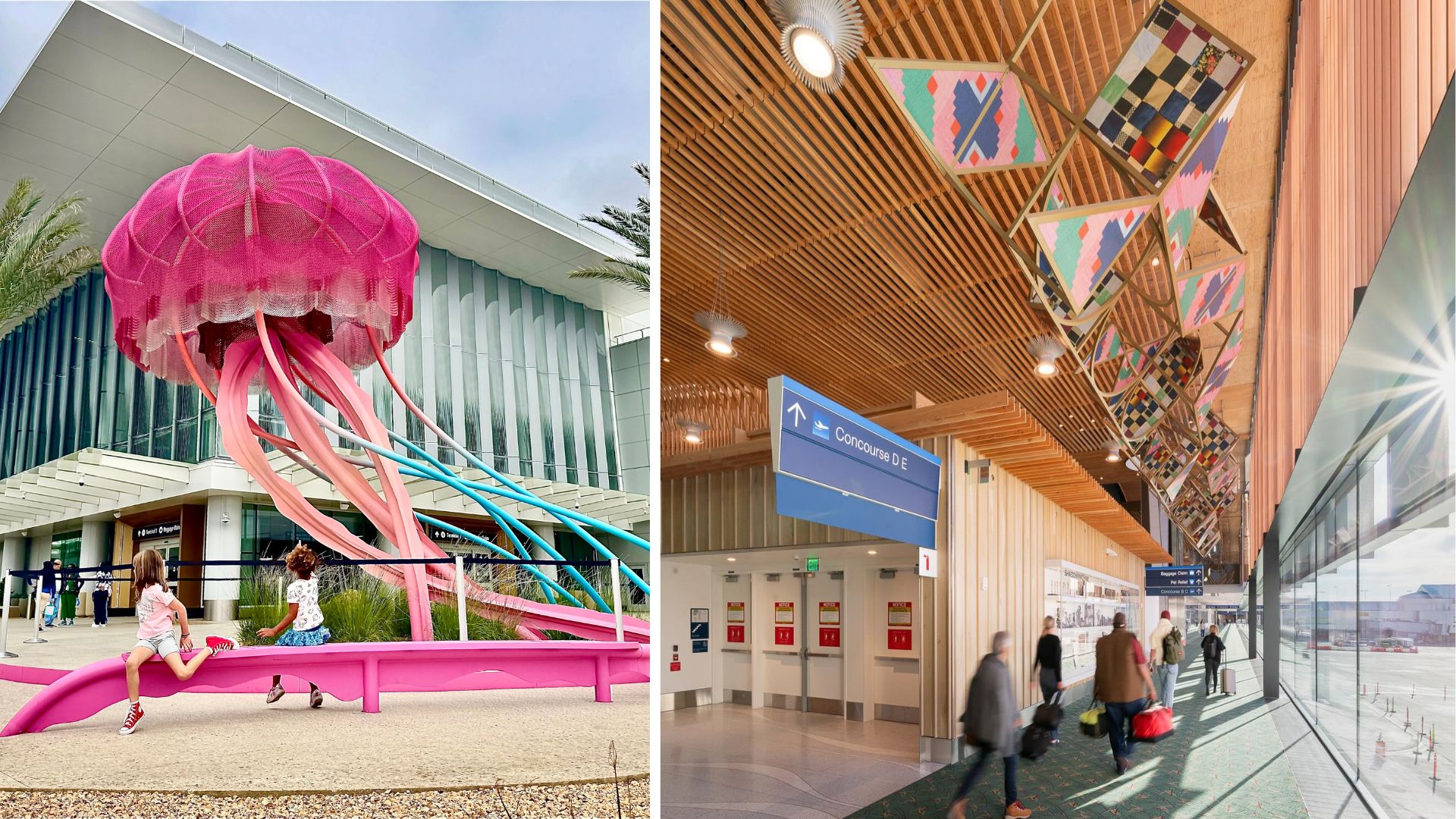
Left: RISE by Matthew Mazzotta, San Diego International Airport / Right: Odyssey by Sanford Biggers, Portland International Airport
The conversation around “percent-for-art” policies is gaining momentum. A growing number of airports are moving from one to two percent of construction budgets dedicated to public art.
The impact is not just financial. It signals a shift in how decision-makers perceive art within the airport ecosystem. Culture is now viewed as an active contributor to customer satisfaction, dwell time, and brand differentiation. By positioning art as infrastructure rather than expense, airports are investing in the emotional capital that drives loyalty and reputation.
Few public spaces offer the visibility and diversity of airports. Every artwork installed within them becomes a conversation between local creators and a global audience. When travellers encounter authentic artistic expression, it offers a first impression of place that no advertising campaign can replicate.
Public art in airports functions as a soft power strategy. It extends the reach of local culture far beyond the terminal, shaping how a city is perceived and remembered. In doing so, airports evolve from transit hubs into cultural ambassadors and symbols of openness and exchange.
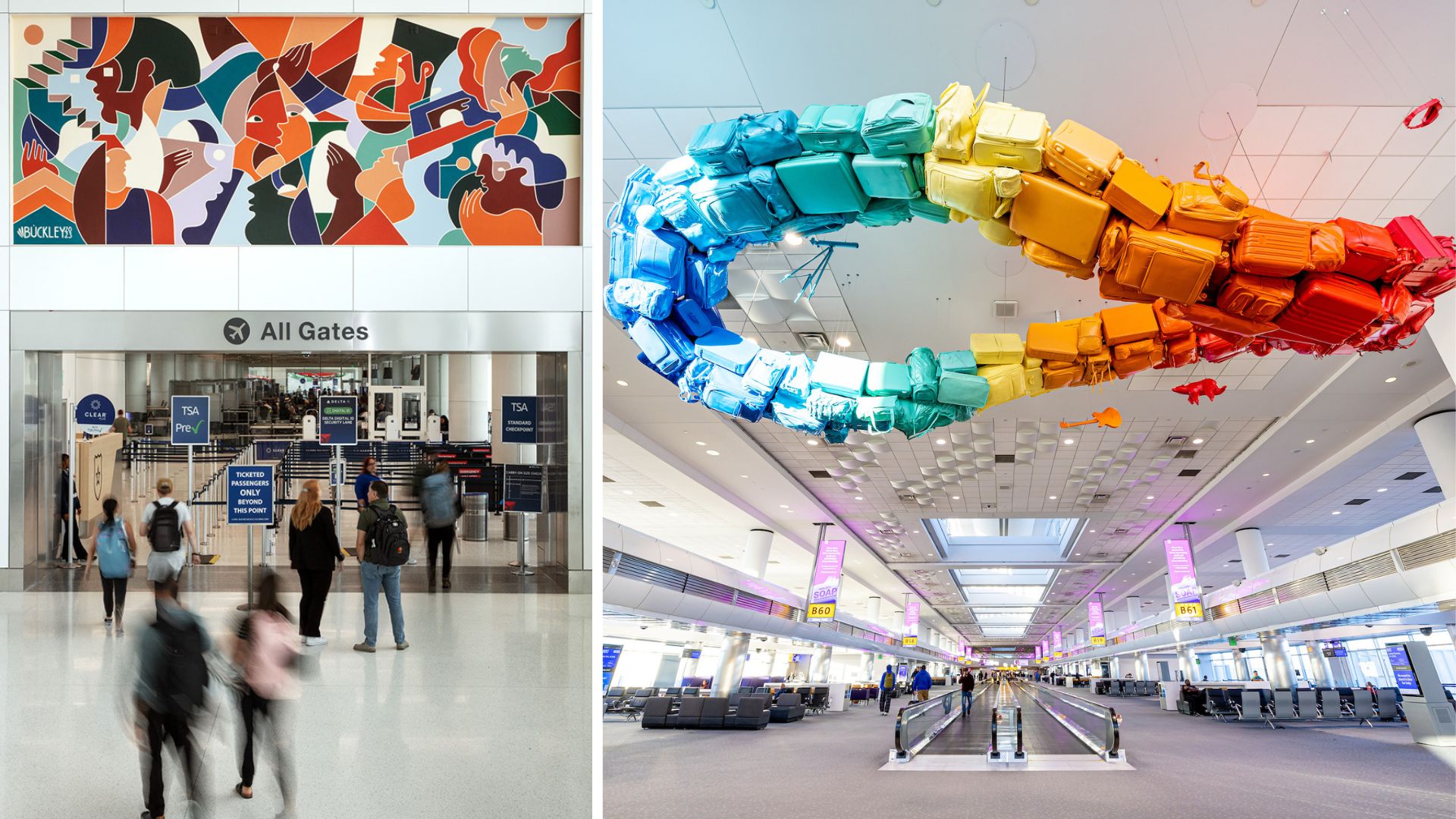
Left: A Place for Us All bySarah “Buckley” Samiani, LAX / Right: It’s Not What You Take, It’s What You Bring Back by Thomas “Detour” Evans, DEN
Representation is becoming a defining principle in contemporary airport art programs. Many are commissioning artists whose voices have historically been underrepresented, ensuring that the narratives embedded in public space reflect the diversity of the communities they serve.
This evolution is more than symbolic. It builds civic legitimacy and creates an atmosphere of authenticity that travellers instinctively respond to. When inclusion is visible, it deepens trust and connection by turning airports into spaces that embody the social values of the places they represent.
Beyond visual art, airports are experimenting with live cultural programming to reintroduce emotion into the travel experience. Heathrow, LAX, and Austin have developed seasonal music and performance initiatives that resemble curated festivals, complete with artist lineups, visual identity, and programming spread across terminals.
These experiences do more than entertain. They establish a rhythm and energy that transform waiting into engagement. Cultural activation creates moments that humanize large-scale infrastructure and invite travellers to feel part of something local and alive.
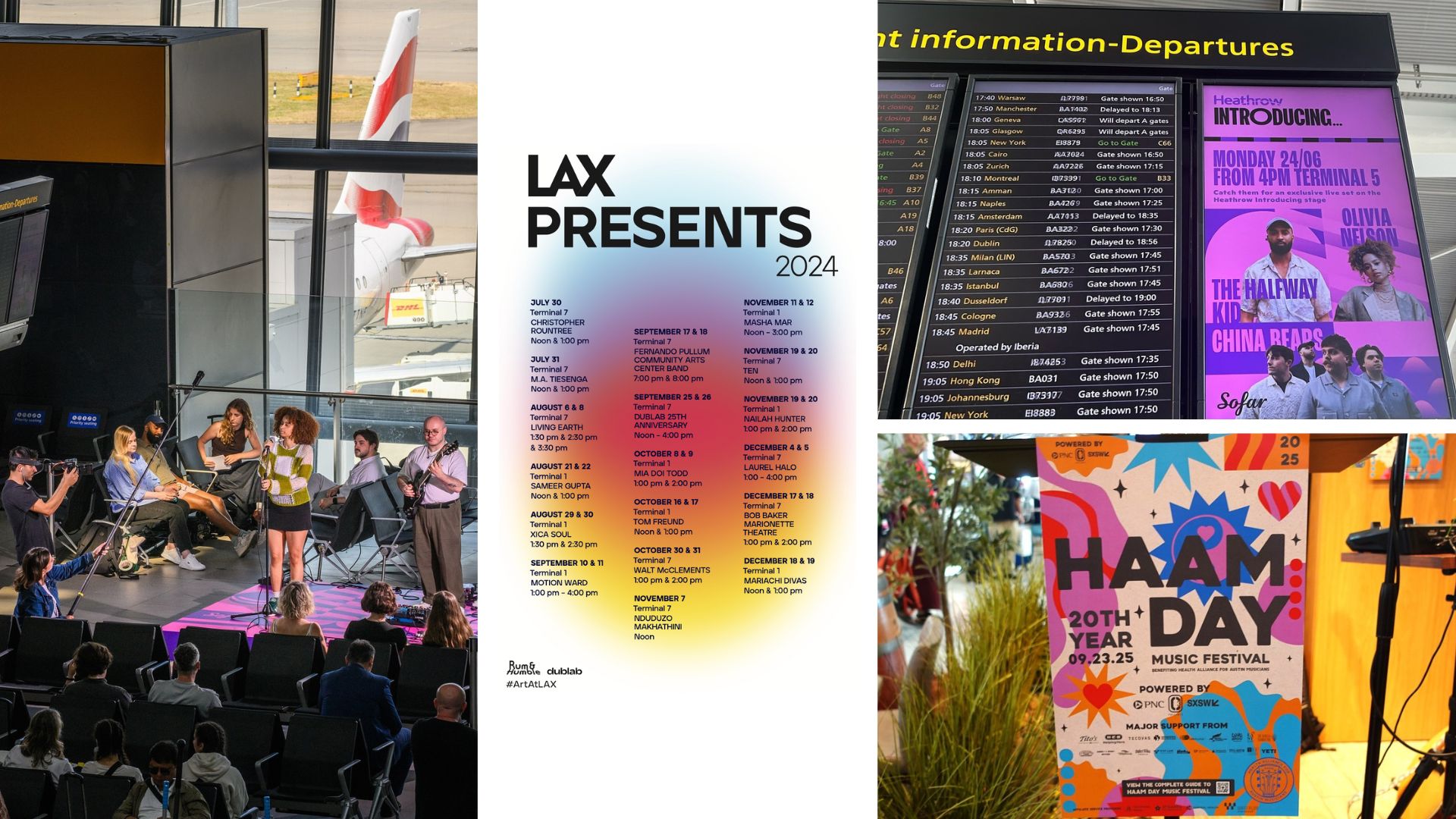
Live Music Programming at Austin, Heathrow, Los Angeles International Airports
The sessions in Tampa underscored how far airport placemaking has come. The integration of culture within infrastructure is no longer a trend; it is becoming a benchmark for quality of place. Airports that embed art, design, and community at the foundation of their planning process are building destinations that stand out not only for how they function but for how they feel.
At MASSIVart, we continue to see the impact of this approach through our collaborations with airports worldwide. From strategy to implementation, MASSIVart is leading the multi-phase public art program for Dallas-Fort Worth International Airport. Three calls, totalling seven opportunities, have already been launched, each attracting hundreds of submissions from artists worldwide. The first two selected artists, Pae White and Jennifer Rose, are now developing new site-specific works that will shape the cultural identity of Terminal C.
This project reflects a broader shift within the industry: a recognition that airports are not only gateways to destinations, but destinations in themselves cultural landmarks that connect people, stories, and experiences across the globe.
–
Cover image: Sunrising by Shane Darwent – Tulsa International Airport