
Home /
Home /
As real estate leaders work to create walkable, authentic and community-centred places, Andrea Teran argues that many of those conditions already exist in underused urban cores.
Across markets, developers are working to create places with the qualities people increasingly want from urban life: walkability, proximity, culture, public space, social connection and a stronger sense of identity.
These conditions are often framed as ambitions for new mixed-use districts, lifestyle destinations or master-planned communities. Yet in many cities, they already exist in older urban cores whose value has been weakened by vacancy, depopulation, fragmented governance and a loss of public trust.
San José’s historic centre is one of those places.
For Andrea Teran, a Costa Rica-based community strategist and social development specialist, the lesson extends well beyond Costa Rica. The future of place-led development depends partly on how cities, developers and communities recognize the urban assets they already have, then rebuild the conditions that allow those assets to support daily life again.
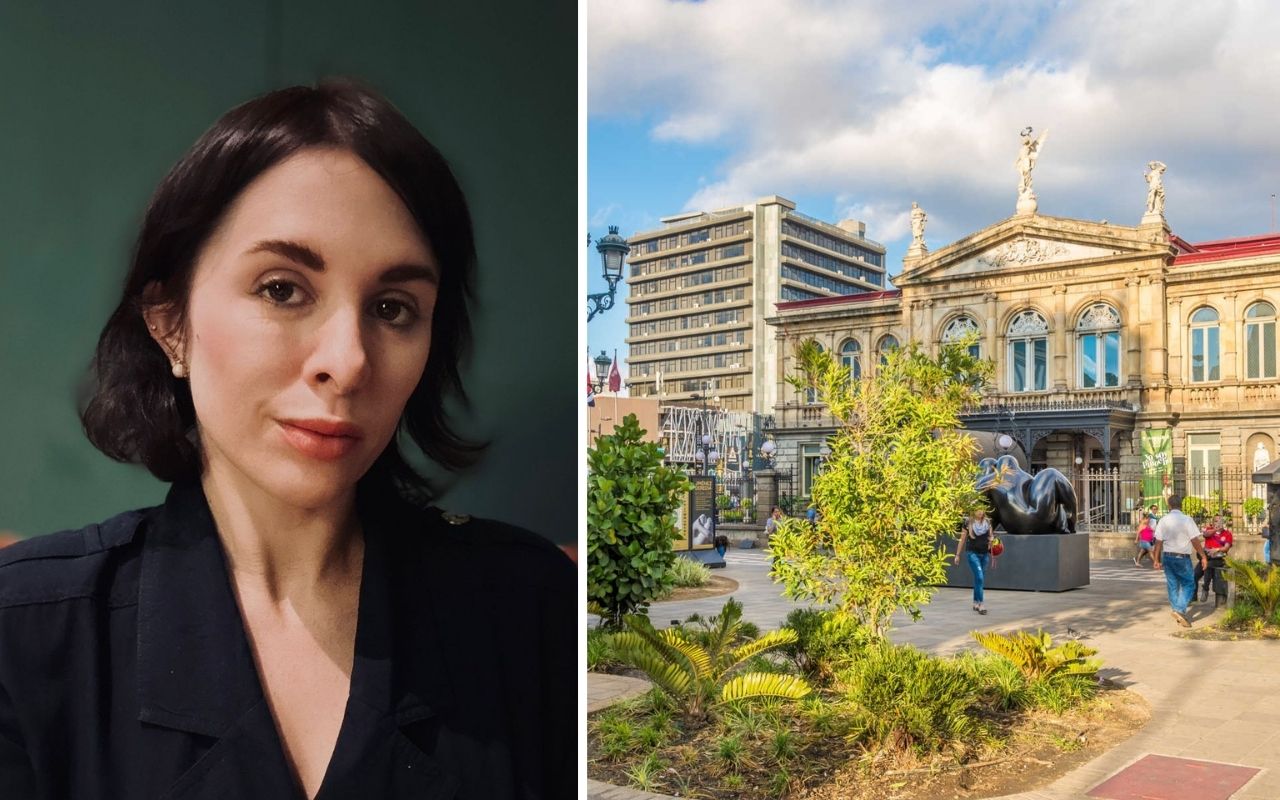
Through her consultancy, TRANSFORMATORIO, Teran works with real estate developers, NGOs and community leaders to understand local contexts and create initiatives that build trust, participation and shared value. Her work spans placemaking, community engagement, multi-stakeholder partnerships, social activation and age-friendly cities, bringing together questions that are often treated separately: how public space is used, how trust is built, how communities organize and how real estate decisions affect the social life of a place.
Her perspective on San José is both specific and widely relevant. The Costa Rican capital has experienced decades of depopulation, building vacancy and deterioration in its urban core. Yet the centre still holds many of the qualities that cities and developers are trying to create elsewhere: proximity, connectivity, culture, identity, services and public life.
The question is whether those qualities can become liveable again.
Real estate teams spend significant time and capital trying to create a sense of place from the ground up. They work to support walkability, attract cultural uses, establish identity, animate public space and give people reasons to stay beyond a single transaction.
San José’s centre already has jobs, services, transit, institutions and culture. Its buildings carry memory. Its streets still hold symbolic and spatial value. Its identity comes from the city’s history, not from a branding exercise.
The opportunity is complex because many of these assets have been weakened over time. Vacancy, disinvestment and fragmented governance have affected how the centre functions. Still, the starting point differs from a greenfield development or a newly planned district. The raw material is already there.
For developers, that creates a different kind of opportunity.
The value sits in the asset, but also in the possibility of reconnecting a fragmented urban ecosystem. Older central districts can offer a foundation for denser, more walkable and more socially connected urban life, provided the right conditions are put back in place.
The visible symptoms of decline are easy to name: empty buildings, weakened retail, deteriorated public spaces, perceived insecurity and limited residential use. Teran points to a deeper barrier in San José: a lack of trust between the people and institutions who need to act together.
Municipal authorities, property owners, merchants, everyday users, cultural actors and community leaders are often dealing with the same urban challenges from separate positions. Each group carries its own frustrations, constraints and risks. Without a shared vision or a structure for collaboration, interventions tend to remain isolated.
That matters because regeneration depends on coordinated action. A developer can convert a building, but confidence in an entire district takes more than one project. A city can invest in infrastructure, but everyday life depends on residents, businesses, cultural actors and local stewardship. Community leaders can activate spaces, but they need support, continuity and channels into decision-making.
For developers, entering an underused urban core requires more than identifying a site and delivering a project. It calls for a clear understanding of the relationships, tensions and expectations already attached to the place.
A strong development strategy also needs a stakeholder strategy.
One of the clearest lessons from San José is that a city centre cannot rely only on offices, commerce, institutions or occasional cultural events. Without people living there, the centre remains a place of passage. A daytime economy can generate movement, but not the routines, local spending, informal surveillance and sense of permanence that make public life feel safe and familiar.
For Teran, bringing people back to the centre is fundamental. That means creating affordable and diverse housing options, not only high-end residential conversions. It also opens the door to models better suited to changing demographics and household structures, including senior cohousing, cooperatives, coliving and other forms of community-oriented housing.
This is especially relevant in Costa Rica, where the population is aging quickly. As more people look for proximity, services, walkability and social connection, historic centres could become increasingly relevant, provided housing is treated as part of a larger urban ecosystem connected to mobility, public space, health, culture, services and daily needs.
Adaptive reuse is part of that equation, but the path is often difficult. Teran points to the complexity property owners face when trying to convert buildings for new uses, especially housing. Fire safety requirements, emergency exits, structural upgrades, accessibility standards and multiple institutional approvals are all important. When processes are fragmented, slow or difficult to navigate, reuse can become financially or operationally unrealistic.
Cities that want adaptive reuse need approval systems that support it: more coordinated permitting, clearer pathways for building conversion, technical support for owners, special procedures for historic districts and pilot projects that prove new models can work. Developers can also help reveal where regulatory systems are blocking viable reuse and create precedents that reduce uncertainty for the next wave of investment.
Without this kind of coordination, historic centres remain caught between ambition and implementation.
Many stakeholders may agree that reuse is desirable, while the practical conditions continue to discourage it.
In Costa Rica, Teran sees placemaking as an emerging field. Interest is growing among developers, designers, civic leaders and community-focused organizations. She also sees a recurring misunderstanding: placemaking is still too often treated as programming, beautification or a communications layer added near the end of a project.
In a regeneration context, placemaking needs to begin much earlier. It can help shape how a project understands its surroundings, who it engages, what uses it supports and how it contributes to the wider district over time.
Before design is fixed, placemaking can help identify local assets, tensions, community leaders, cultural actors, existing behaviours and gaps in everyday life. During development, it can help build partnerships and test ideas. After opening, it can support governance, programming and long-term relevance.
This is where a place-led approach becomes practical.
It brings the realities of the place into the development process from the beginning, rather than treating culture or community as a final layer. Projects that engage with context early are more likely to create relevance, shared value and a stronger relationship with the communities around them.
Large-scale urban transformation takes time. Buildings need financing. Regulations need alignment. Public infrastructure needs planning. Housing strategies need partnerships. Governance models need to be built. But the story of a place can begin to change before all of that is complete.
For Teran, placemaking and cultural activation can work in the “meanwhile.” Temporary interventions, pilot projects and low-cost activations can bring people back into underused spaces, test new uses and make change visible earlier in the process.
This matters in places where decline has shaped public perception for years. When people have learned to avoid a district, distrust it or see it only through negative labels, a master plan will struggle to shift behaviour on its own. People need evidence they can experience directly.
Culture can provide that evidence. It can create moments of public joy, support local artists and businesses, invite people to return, and reconnect residents with places they may have written off. The strongest cultural strategies work with people who are already there: local leaders, merchants, cultural organizations, artists and residents who have continued to care for the district even during periods of decline.
Activation, in that sense, builds momentum and trust. It helps bridge the gap between a long-term vision and the lived experience of change.
Costa Rica has a strong culture of wellness, and Teran sees that influence shaping real estate. People are increasingly looking for environments that support physical, mental and social well-being. Walkability, access to nature, natural light, ventilation, active lifestyles and community connection are becoming more central to how projects are conceived.
Many wellness-oriented developments are happening outside historic centres, even though urban cores already offer some of the conditions wellness requires: proximity, access to services, social infrastructure and everyday connection.
A person’s well-being is shaped by whether they can walk to daily needs, access public space, participate in community life, age in place, feel safe in the public realm and remain connected to others. These are design, planning and social questions at the same time.
Historic centres can support this broader definition of wellness when they combine housing, mobility, public space, culture, services and social connection.
For aging populations, smaller households and younger professionals seeking more central lifestyles, these districts can offer an alternative to car-dependent models of growth.
The lesson from San José does not depend on every city having the same history, governance structure or market conditions. Its relevance lies in a broader pattern: many cities have central districts with strong underlying assets and weakened urban life.
They have buildings that could be reused, public spaces that could be reactivated, cultural identities that could be strengthened and communities that could be better supported. They also have barriers that design alone cannot solve.
For developers, this requires a wider view of value creation. The opportunity in older urban cores is to work with complexity carefully enough that these places can become liveable, trusted and relevant again. That means thinking beyond the project boundary and understanding housing as part of public life, culture as part of early momentum, governance as part of implementation and trust as part of the development equation.
The developers who succeed in these contexts will recognize what is already there and help reconnect it.
The future of real estate will be shaped by new destinations, but also by the transformation of places cities already have, so they can support the next generation of urban life.