
Home /
Home /
In many developments, value is still concentrated too narrowly inside the built envelope. Architecture gets the attention. So do tenant mix, amenities, leasing strategy, and the performance of each individual component. Public space often arrives later in the conversation, treated as circulation, visual polish, or the final layer of improvement once the “real” work is done.
But people do not experience places that way.
What they remember about a district, a community, an airport, or a waterfront often starts before they ever step inside a unit, a store, or a venue. It starts in the public realm: how the place receives them, how easy it is to read, where it lets them pause, and whether there is any reason to stay longer than planned.
In many cases, the most valuable difference sits outside the lease line. It is in the shared spaces that shape movement, pause, interaction, and belonging.
A place is often judged by what it allows people to do with their time. Place-led development gives that experience a strategy, instead of leaving it to happen by accident.
Public space is still too often described in soft terms, as if it belonged mainly to civic aspiration or visual ambition. But strong public space also has a very practical business role.
It extends dwell. It gives people reasons to stay beyond a single transaction. It improves the perceived quality of the environment around it, which can strengthen the appeal of retail, hospitality, residential, and mixed-use components nearby.
It also gives a project a visible identity that tenant mix alone cannot carry. Identity is shaped by what occupies a place, yes, but also by how that place feels to move through, return to, and share with other people.
For master planned communities and mixed-use districts, the public realm is often where community life first becomes legible. Residents begin to understand where to gather. Daily rituals start to settle in. A development starts to feel less like a composition of assets and more like a place people can actually inhabit.
This is where placemaking and place-led development become useful. They help translate business goals, community needs, cultural context, and physical design into a public realm that can actually support use. Not as an afterthought, and not as a decorative layer, but as part of how the development is planned, positioned, and experienced.
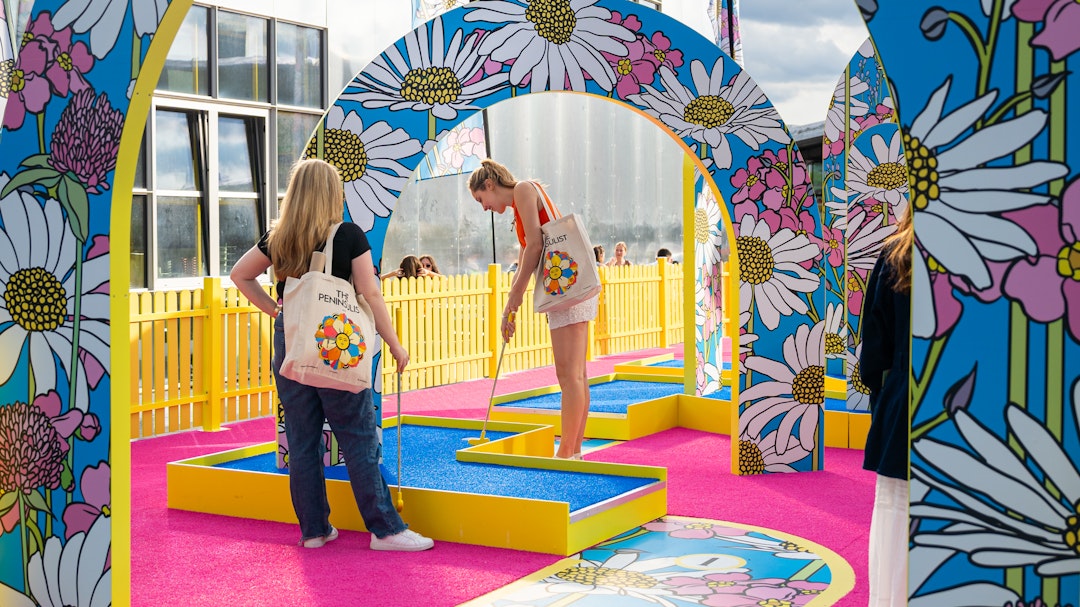
One useful test for a project is simple: are its shared spaces designed only to move people through, or do they give people a reason to stay?
Pass-through spaces are efficient. They direct movement, distribute flow, and help people get from one point to another. There is nothing wrong with that. A district, terminal, campus, or plaza needs to function.
The issue is what happens when efficiency becomes the only ambition. The space may work on paper, but still feel thin in real life. Functional, perhaps. Memorable, rarely.
Stay spaces operate differently. They create comfort, legibility, and choice. They give people permission to sit, wait, gather, observe, meet someone, or simply remain there for a while. That shift can be subtle, but it changes the social and commercial life of a place.
Strong public spaces support different durations of use at once: a two-minute pause, a twenty-minute meeting, a two-hour visit. That flexibility matters. It is one of the reasons public space can keep generating value long after opening day.
These are not decorative upgrades. They influence how a place performs. Placemaking helps identify where those moments should happen, what they should support, and how they can connect to the larger story of the place.
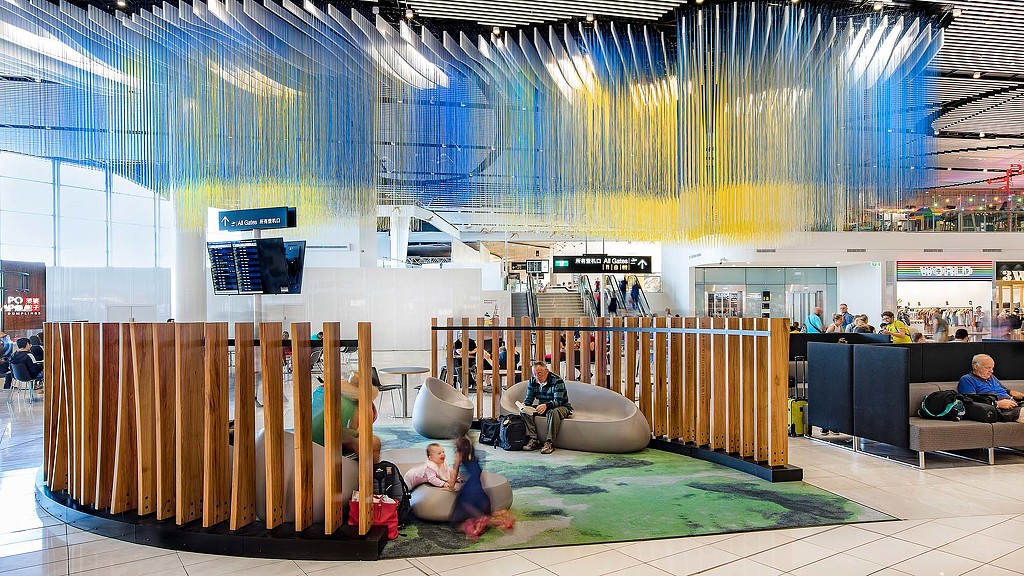
Strong public space rarely comes from a single design move. It usually comes from a series of decisions made early enough to shape the project: where people arrive, where they slow down, what feels comfortable, what feels local, and what gives the place a reason to be remembered.
Comfort comes first. Shade, seating, weather protection, lighting, acoustics, and human-scaled proportions all matter because they determine whether a space works in lived terms, not just visual ones. A place can look convincing in renderings and still fail once people are expected to use it. If it is too hot, too exposed, too loud, too empty, or too awkward to sit in, people will move on.
Programming capacity matters too. Public spaces that perform well over time usually support both everyday use and moments of activation. They can host seasonal programming, informal gathering, temporary installations, events, and changing patterns of use without feeling overdesigned for only one scenario. That adaptability keeps them relevant after the launch campaign is over.
Identity gives the space specificity. Materials, planting, landmarks, public art, and local cues help create a place that feels rooted rather than interchangeable. In a development landscape where many projects are starting to look and feel similar, that specificity carries real value. It helps people recognize a place, remember it, talk about it, and feel that it belongs where it is.
Edges and interfaces often decide whether the space works. Public space rarely succeeds in isolation. It depends on how buildings meet the ground, how active the frontages are, how porous the thresholds feel, and whether the relationship between inside and outside supports a coherent experience.
Some successful places do not rely on one spectacular gesture. They work because dozens of smaller decisions reinforce each other: a shaded edge, a clear path, a place to sit, a reason to look around, a storefront that opens onto the plaza, a public artwork that gives people a point of reference.
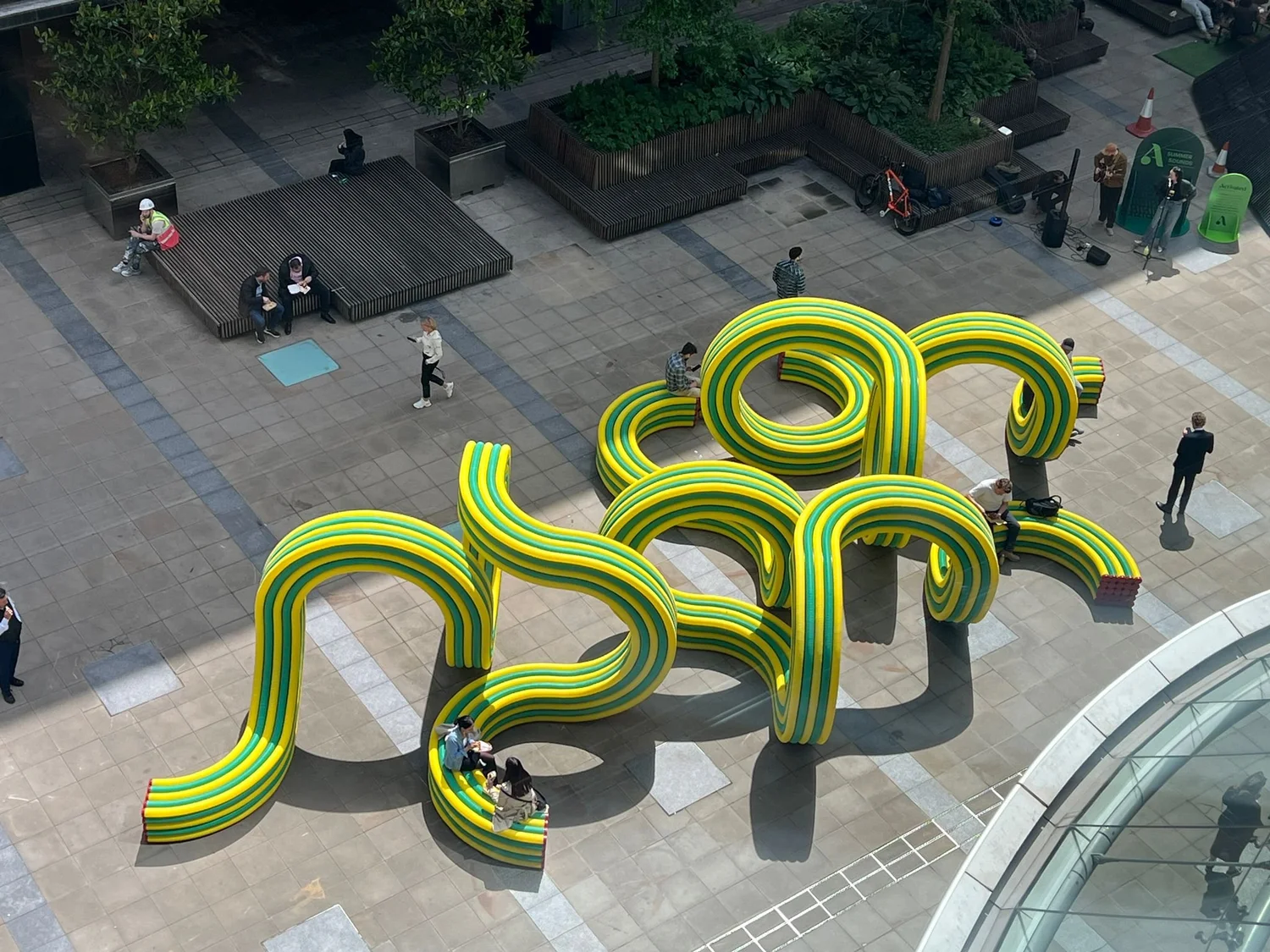
This way of thinking applies beyond core commercial real estate.
In airports, public-space thinking shapes how a region introduces itself. It can improve orientation, soften the experience of waiting, and create a more human relationship with time spent under constraint.
In transit-adjacent developments, station areas and surrounding plazas can become gateways rather than transfer zones.
In master planned communities, parks, trails, commons, and shared gathering spaces often become the emotional centre of the development. They are where people meet neighbours, build routines, and begin to attach themselves to the place.
In civic and waterfront destinations, the quality of public space often determines whether a place becomes part of people’s routines or remains somewhere they visit once, take a few photos, and leave.
Across these sectors, the public realm carries a large share of the experience people remember and use collectively.
Projects become distinctive through the way they host public life.
That is why public space deserves more strategic attention than it often receives. In a market full of lookalike developments, it remains one of the few differentiators that is immediately visible, widely shared, socially experienced, and difficult to reproduce.
But public space only becomes a real differentiator when it is specific. It needs to respond to the site, the people who use it, the local culture, the project’s ambitions, and the everyday behaviours it is meant to support.
That is the role of place-led development and placemaking: to connect those layers early enough for them to shape the outcome.
It affects perception before entry. It shapes value during use. And it stays in memory after someone has left.