
Home /
Home /
At the closing of the Global Placemaking X Summit in Toronto, MASSIVart’s Senior Cultural Planner, Margaux Weinrib, and Project Director, Dominic Tremblay, led a participatory workshop titled “Public Art Without the Artwashing.”
While art can be dropped in to draw a crowd or make a space look more beautiful, it can create the illusion of community investment, even when the existing community hasn’t been meaningfully engaged. The result is art that feels disconnected, more about aesthetics than authenticity. Amongst creative placemaking professionals, this is known as “artwashing”.
At MASSIVart, we’re deeply aware of this risk. That’s why we champion a public art strategy that is rooted in collaboration, cultural sensitivity, and long-term value, ensuring that public art doesn’t just decorate a space but reflects and strengthens the community it is part of. Public art, when created strategically, can help communities honour their heritage and cultural memory, foster authentic ownership over the ideas, and help create meaningful identities for their communities as their city evolves.
Global placemakers participated in the hands-on session to better understand this process. To begin, participants were given a mock scenario, based on common themes we are frequently exposed to in our current placemaking work.
The Fictional Neighbourhood: East Garden
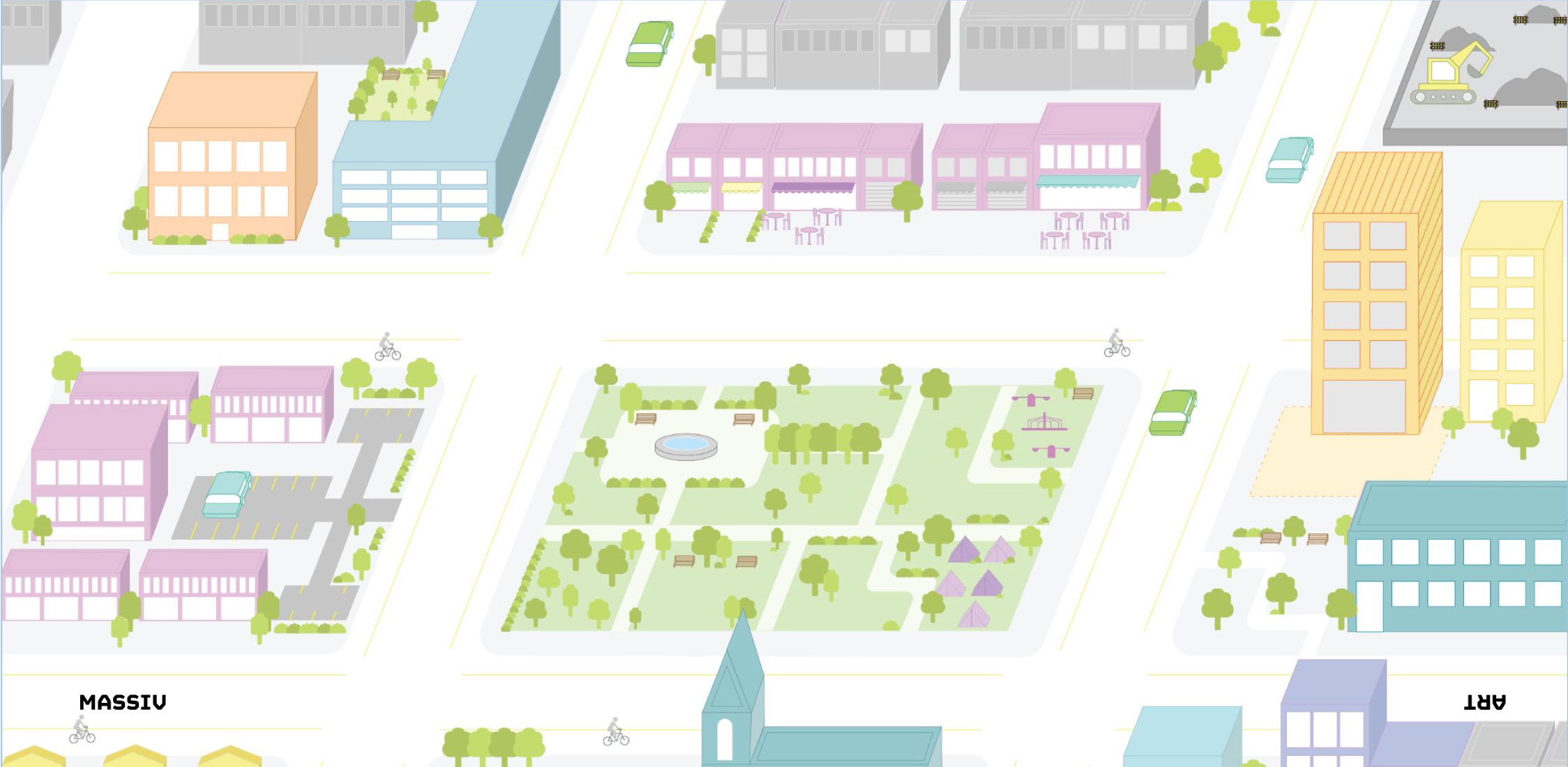
Inspired by real communities MASSIVart has worked in across the Americas, East Garden is a hypothetical yet familiar neighbourhood undergoing rapid transformation. With encampments, rising rents, newly planned developments and privately owned public spaces (POPS), vacant storefronts, and underused parks, this is a story that reflects development challenges common to many cities.
The Process
Mirroring MASSIVart’s approach to centring community in public art strategies, Participants moved through four steps as follows:
From functional seating to symbolic structures, participants proposed a range of public art concepts that responded directly to the fictional context of East Garden. Each team brought a unique perspective, some focused on a single community goal with a few high-impact interventions, while others addressed a wide array of neighbourhood challenges through more layered and prolific approaches.
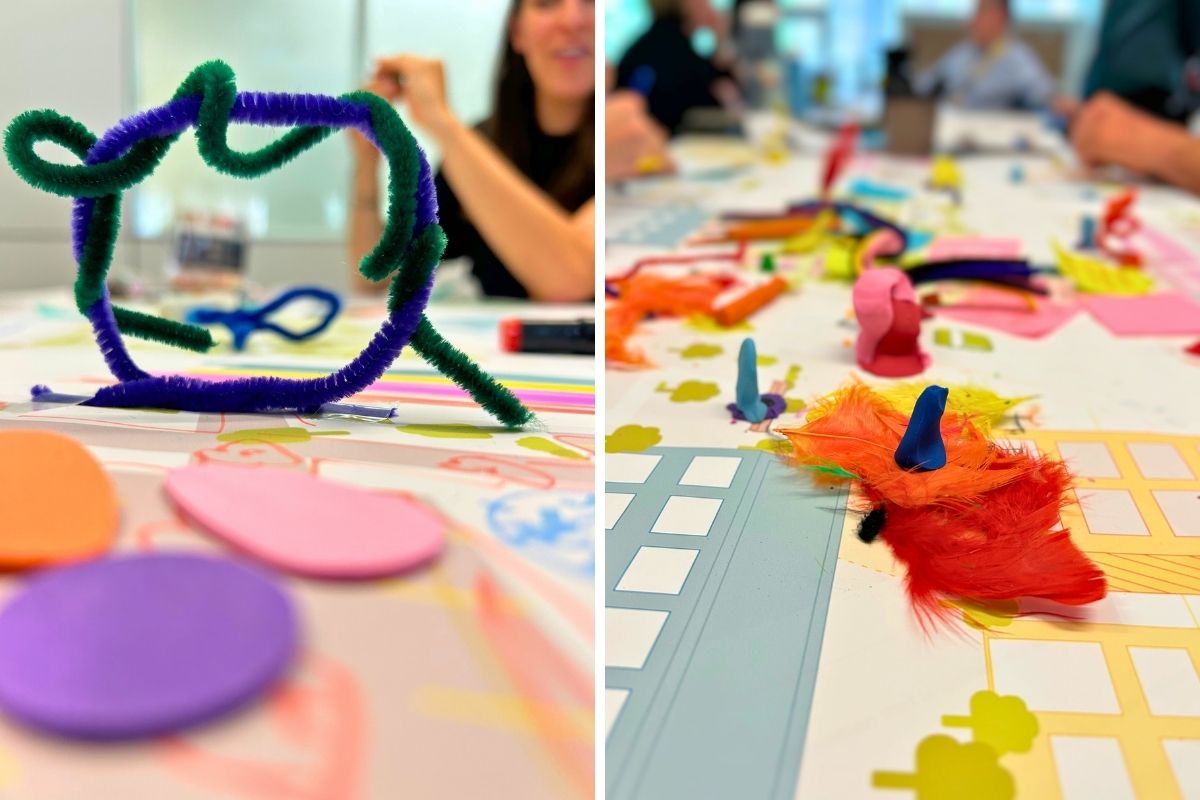
Here are some of the ideas that emerged:
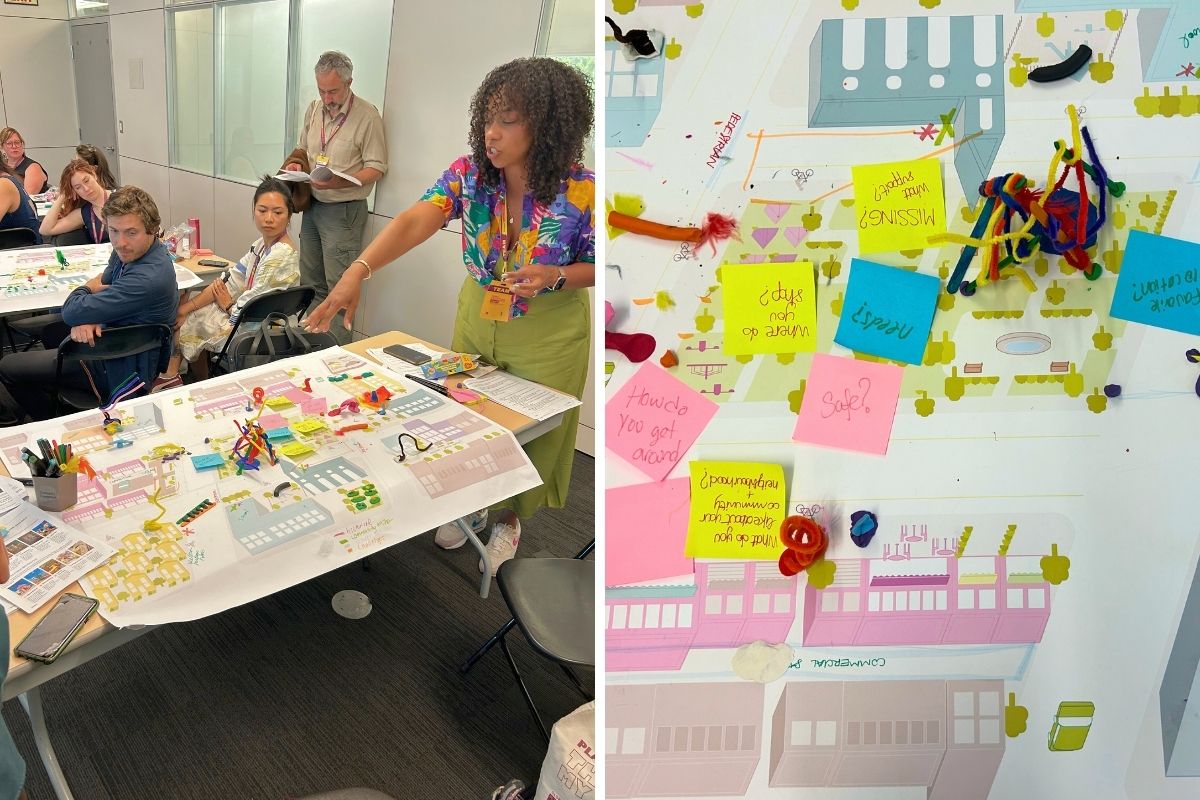
The outcomes of the session were reflective, critical, and deeply rooted in place-based thinking. Participants we spoke with after the session shared their key takeaways with us, including what they learned:
Overall, our workshop emphasized that when it comes to creative placemaking and meaningful public art, we are never given a blank canvas. The strategy often involves navigating competing priorities and multiple stakeholders, including developers’ goals, artists’ visions, and the lived experiences of local communities, while also navigating the needs of a city and complex urban changes.
While these strategies must deliver on many fronts, the most important thing is to ensure we keep working towards building physical and emotional connections between the communities and the places they share. Ultimately, this is what will help generate long-term value for all stakeholders involved.